Fine Line Tattoo Shop Near Me: How to Judge Real Skill?

Searching for a fine line tattoo shop near me is about more than finding the closest studio. Fine line tattoos rely on controlled needle depth, steady hand movement and precise line placement, meaning small technical mistakes can be far more visible than they would be in a heavier traditional tattoo.
Fine line tattooing has developed from the single-needle black-and-grey techniques associated with artists such as Jack Rudy and Freddy Negrete into a broad modern style covering delicate florals, handwriting, minimalist designs, micro-realism and geometric work. At Creato Tattoo, 114 Bold Street in Liverpool City Centre, Saeid focuses on bespoke fine line and single-needle tattoos for clients looking for detailed, carefully planned work.
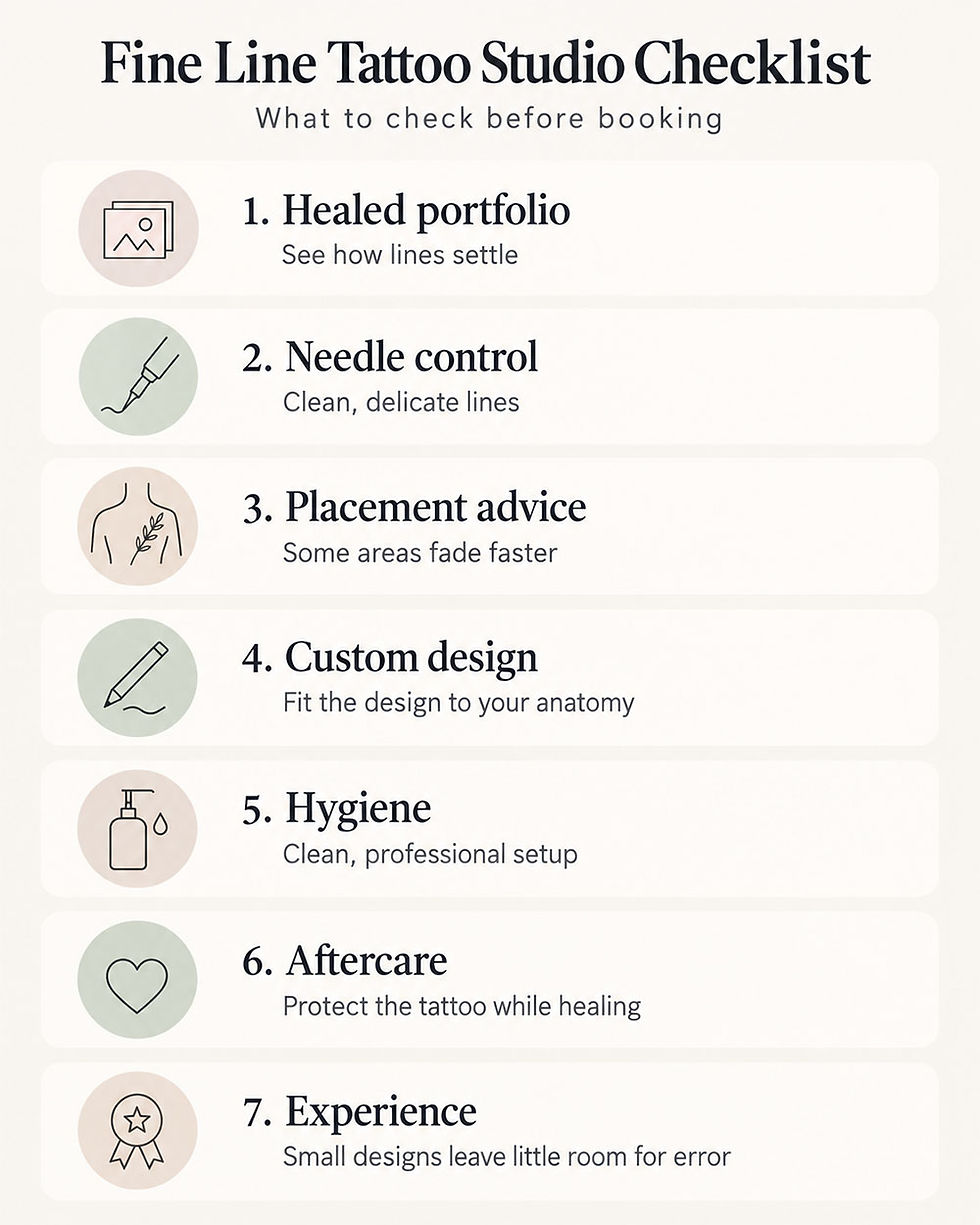
What to Check | Why It Matters for Fine Line Tattoos |
Healed portfolio | Shows how lines settle after months, not just immediately after tattooing |
Needle control | Helps create thin lines without excessive trauma or spreading |
Placement advice | High-friction areas can fade or soften faster |
Custom design process | Allows line spacing and scale to suit your anatomy |
Hygiene standards | Essential for every professional tattoo procedure |
Aftercare guidance | Fine lines need careful healing and UV protection |
Artist experience | Small-scale designs leave little room for technical error |
The Mechanics of Fine Line: How Precision Is Achieved
Fine line tattooing uses smaller needle groupings and lighter visual weight than many traditional tattoo styles. The aim is not simply to make every line as thin as possible. A good fine line tattoo needs enough structure, spacing and pigment retention to remain readable as the skin naturally changes over time.
The artist must balance needle configuration, machine settings, hand speed, skin tension and placement. This is why choosing an experienced single needle tattoo Liverpool artist matters, particularly for tiny lettering, botanical details or designs with closely spaced lines.
Single-Needle 1RL vs Tight Round Liners 3RL
A 1RL uses a single needle point and can create extremely delicate marks when used appropriately. It is commonly associated with micro-details, very thin outlines and small decorative elements.
A tight 3RL uses three closely grouped needles. It can still produce a refined line while providing slightly more pigment coverage and stability. An experienced artist chooses the grouping according to the design rather than automatically using the smallest possible needle.
Managing Dermal Depth and Preventing Blowout
Tattoo pigment needs to be placed at a controlled depth within the skin. If the needle goes too shallow, sections of a line may heal lighter or drop out. If it travels too deeply, pigment can spread underneath the skin and create the blurred appearance commonly known as a tattoo blowout.
Fine line work makes these variations particularly noticeable. Consistent hand pressure, skin stretching, machine control and awareness of changing skin thickness across the body all contribute to cleaner healing.
Solid Outlines vs Grey Wash Longevity
Solid black pigment generally creates stronger contrast than very diluted grey wash. At extremely small scales, soft grey details may become less obvious as the tattoo ages, particularly when the design relies on tiny differences in tone.
That does not mean grey wash should be avoided. It simply needs to be used with realistic expectations and enough spacing for the composition to remain visually clear over time.
The Truth About Numbing Creams
Some clients assume numbing cream should automatically be applied before a fine line tattoo, but many artists prefer clients not to use topical anaesthetics unless they have discussed the product beforehand.
Different formulas may temporarily change the way the skin feels or behaves while being tattooed, and incorrect application can interfere with the session. If pain management is a concern, speak to the artist before your appointment rather than applying a numbing product without telling them.
Popular Fine Line Styles and Applications at Creato Tattoo
One advantage of fine line tattooing is its flexibility. Designs can range from tiny standalone symbols to larger compositions built from delicate outlines, shading and negative space.
At Creato Tattoo, the design process can be adapted around the subject, placement and amount of detail needed rather than forcing every idea into the same minimalist style.
Micro-Botanicals, Florals and Nature
Wildflowers, lavender, leaves and small botanical compositions work naturally with fine line techniques. Thin stems and controlled line variation can create detail without making a small design feel visually heavy.
When designing micro-florals, enough space must still be left between leaves, petals and internal details so the tattoo remains legible after healing.

Crisp Script, Family Handwriting and Lettering
Fine needles can be suitable for personal handwriting, names, dates, typewriter-inspired lettering and small script tattoos.
The challenge is spacing. Letters placed too closely together may become harder to distinguish over time, so a good artist may recommend making the design slightly larger or simplifying individual characters while keeping the original character of the handwriting.
Minimalist Continuous Line and Abstract Figures
Continuous-line portraits, facial silhouettes and abstract contour designs use a small number of deliberate lines to suggest a larger form.
Because every line contributes to the composition, stencil placement and body positioning are especially important. Slight adjustments may be made so the artwork follows the natural shape of the chosen area.
Micro-Astrology and Sacred Geometry
Constellations, ornamental symbols, geometric shapes and delicate spiritual motifs can all be adapted to fine line tattooing.
Symmetrical designs require particular attention to proportion and placement. Very small geometric details may also need to be simplified so they remain clear rather than blending together as the tattoo matures.
Single-Needle Pet Silhouettes and Micro-Realism
Pet outlines, paw-inspired pieces and simplified animal portraits can capture recognisable features without requiring a large tattoo.
For micro-realism, scale matters. Trying to reproduce too many photographic details in a very small area can compromise long-term readability, so the artist may recommend prioritising the animal's strongest features.
Restorative and Scar-Related Work
Tattooing may sometimes be considered around healed surgical or accidental scars, but scar tissue behaves differently from unaffected skin. Not every scar is suitable for tattooing, and the area generally needs to be fully healed and stable before an artist can assess it.
Scar camouflage and paramedical tattooing can also require specialist techniques beyond ordinary decorative fine line work. Clients should discuss the individual scar, medical history and expected result during a consultation rather than assuming it can be treated like normal skin.
Longevity and Anatomy: Choosing the Right Placement
Fine line tattoos can age well, but placement influences how quickly a design changes. Areas exposed to repeated rubbing, movement, sun or frequent washing typically place more stress on delicate pigment.
The best placement therefore depends on both aesthetics and lifestyle. Your artist can explain whether a design should be resized, simplified or moved slightly to improve its chances of healing clearly.
Recommended Canvas Areas for Sharp Aging
The inner arm, upper forearm, bicep, collarbone area and upper thigh are commonly considered for fine line work because they can offer a relatively stable surface.
Behind-the-ear tattoos are also popular, although their small size and sun exposure mean realistic expectations about long-term sharpness are still important.

High-Friction and High-Motion Placements
Hands, fingers, palms and feet experience frequent movement, washing and friction. Fine line tattoos in these areas can require more maintenance and may fade unevenly.
Areas that change considerably with movement or body shape can also affect very rigid geometric designs. This does not automatically make them unsuitable, but placement should be discussed before finalising the stencil.
Skin Tone and Pigmentation Considerations
Fine line tattooing can be adapted for a wide range of skin tones. Contrast, line density, pigment choice and the amount of negative space may be adjusted so the finished design remains visible.
A responsible artist should assess the client's actual skin rather than relying on filtered reference images or assuming that one technical approach works equally for everyone.
Studio Standards: What to Look for in a Local Fine Line Studio
When comparing results for fine line tattoo shop near me, look beyond the studio's newest social media photos. Fresh tattoos often appear especially dark and crisp immediately after completion.
A more useful portfolio includes healed examples showing how small lines, lettering and shaded areas have settled several months after the appointment.
Flash Designs vs Bespoke Stencilling
Flash tattoos are pre-designed pieces that can make choosing a tattoo quicker and easier. Bespoke work gives the artist more freedom to adapt scale, orientation and individual details to your body.
At Creato Tattoo, custom concepts can be discussed with Saeid before the appointment so the stencil can be adjusted to the selected placement.
Fresh Photos vs True Healed Portfolios
A freshly completed tattoo does not show its final appearance. Initial redness, temporary swelling and surface ink can all affect how it photographs.
Where possible, look for healed photographs taken six months or longer after the original appointment. These provide a better indication of line retention and the artist's long-term technical results.
Hygiene, Single-Use Equipment and Pigments
Professional tattoo studios should maintain clear hygiene procedures, prepare clean work surfaces and use sterile or single-use equipment where appropriate.
Creato Tattoo's brief specifies disposable micro-cartridges and cruelty-free, vegan pigments as part of its fine line service. Clients can also ask about hygiene and aftercare procedures during their consultation.
A Calm and Inclusive Studio Environment
Fine line tattoos are often chosen by first-time clients or for intimate and delicate placements, making the studio atmosphere an important part of the experience.
A professional session should give you enough time to discuss the design, check the stencil position and ask questions before tattooing begins.
Booking a Fine Line Tattoo at Creato Tattoo
Clients can contact Creato Tattoo before booking to discuss reference images, approximate size, placement and whether the concept is technically suitable as a fine line tattoo.
Sharing clear references in advance also gives the artist a better opportunity to identify details that may need resizing or simplification.
Consultation by Phone or WhatsApp
A preliminary consultation can be used to review your concept and determine whether an in-person design discussion is necessary.
For custom pieces, the final artwork may also depend on the proportions of the body area rather than being copied directly from a photograph or online reference.
Age, Deposits and Appointment Preparation
Tattooing at the studio is restricted to clients aged 18 or over, with valid photographic identification required. A booking deposit may also be needed to reserve studio time and begin custom design preparation.
Clients should arrive sober and properly hydrated. If you take aspirin, anticoagulants or any other prescribed medication that may affect bleeding, do not stop it solely for a tattoo appointment. Instead, discuss your medication with the tattoo artist and the healthcare professional responsible for prescribing it. Tattooing during pregnancy is generally avoided, and clients should discuss breastfeeding or other relevant health circumstances with the studio before booking.
Fine Line Tattoo Aftercare
A fine line tattoo may look delicate, but it still creates a healing skin wound and requires appropriate aftercare. Follow the instructions given by your artist because products and dressings can vary.
Avoid picking, scratching or repeatedly touching the tattoo while it heals. Good aftercare helps reduce irritation and gives the pigment the best opportunity to settle evenly.
The Second-Skin Phase
Breathable adhesive tattoo films are often used during the first stage of healing. Depending on the product and the condition of the tattoo, an artist may recommend keeping the film in place for several days.
If the dressing leaks, peels extensively, causes significant irritation or your artist gives different instructions, follow their specific advice rather than automatically leaving it on for a fixed period.
Cleaning and Moisturising
Once the dressing is removed, the tattoo can usually be washed gently with clean hands and a mild fragrance-free cleanser. Pat the area dry rather than rubbing it.
Use only a light layer of the aftercare product recommended by the artist. Applying excessive balm can keep the surface unnecessarily wet and may contribute to irritation.
Exercise, Swimming and UV Exposure
During early healing, avoid swimming, soaking the tattoo and activities that create heavy friction or prolonged moisture over the area. Your artist can advise when normal exercise is appropriate for your placement.
Once fully healed, regular sun protection helps reduce UV-related fading. A broad-spectrum SPF is particularly useful for delicate tattoos in regularly exposed areas.
FAQ About Fine Line Tattoos in Liverpool
How much does a fine line tattoo cost at Creato Tattoo?
Pricing depends on factors such as size, detail, placement and the amount of preparation required. Small does not always mean quick because a tiny detailed tattoo may demand considerable precision. Contact Creato Tattoo with your idea for an individual estimate.
Do fine line tattoos fade faster than traditional tattoos?
They can appear to change more noticeably because the lines are thinner and contain less visual weight. Placement, sun exposure, line spacing, technique and aftercare all influence how a tattoo ages.
Do fine line tattoos hurt less?
Not necessarily. Fine line work may involve fewer passes over some areas, but pain vari


Comments